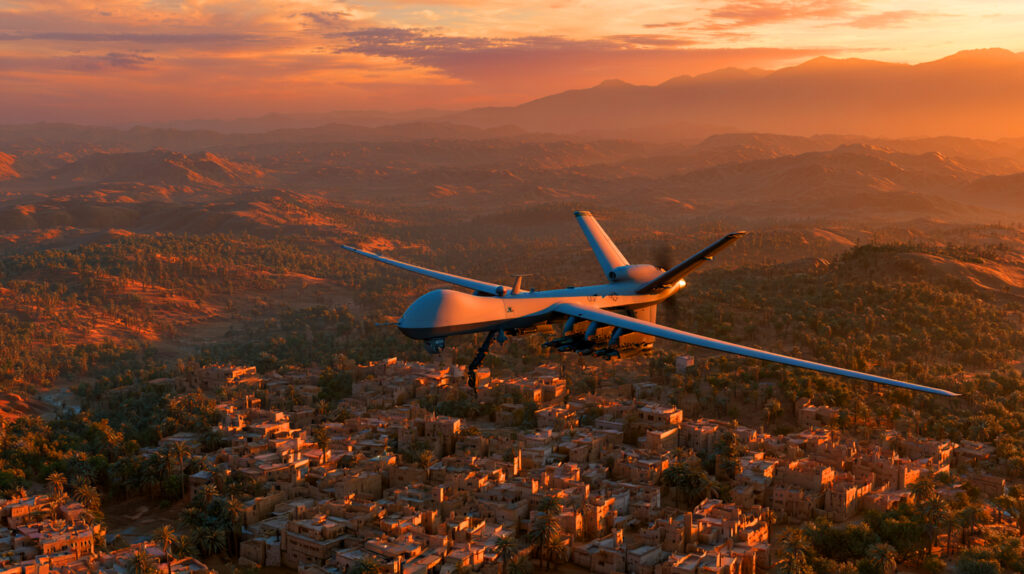
In the Saharan desert of Morocco this month, the United States military tested the future of warfare. Thirty nations participated. More than a dozen private defense contractors competed for contracts. And a robot with a machine gun drove itself across the desert while American soldiers watched from hundreds of miles away.
The system at the center of it all was Project Maven, built by Palantir and powered by Anthropic’s Claude. It ingests battlefield data at a scale no human team can process, identifies targets, and presents decisions to commanders in plain English. A process that once took two to three hours now takes three minutes.
Here is what the general commanding US Africa Command told CBS News about autonomous weapons that kill without human approval: “Ghoulish to me, and it is disturbing.”
Then he said this: “But it’s also foolish not to adopt it because our adversaries will.”
That is the sentence. That is the whole argument. That is the logic that ends every conversation about whether any of this should happen.
The same argument killed the executive order that would have checked whether AI systems were safe before deployment. The same argument is used to dismiss community concerns about data centers draining water supplies. The same argument justifies racing past every safety checkpoint at every scale, from the battlefield to the boardroom.
We cannot slow down because the adversary will not.
Nobody asked the adversary if they feel the same way.
Nobody asked the desert either.
Sources: CBS News, May 29, 2026 — Duarte Dias and Chris Livesay reporting
Cricketpocalypse is an independent channel. No corporate funding. No AI company money. Just the facts and the bugs.