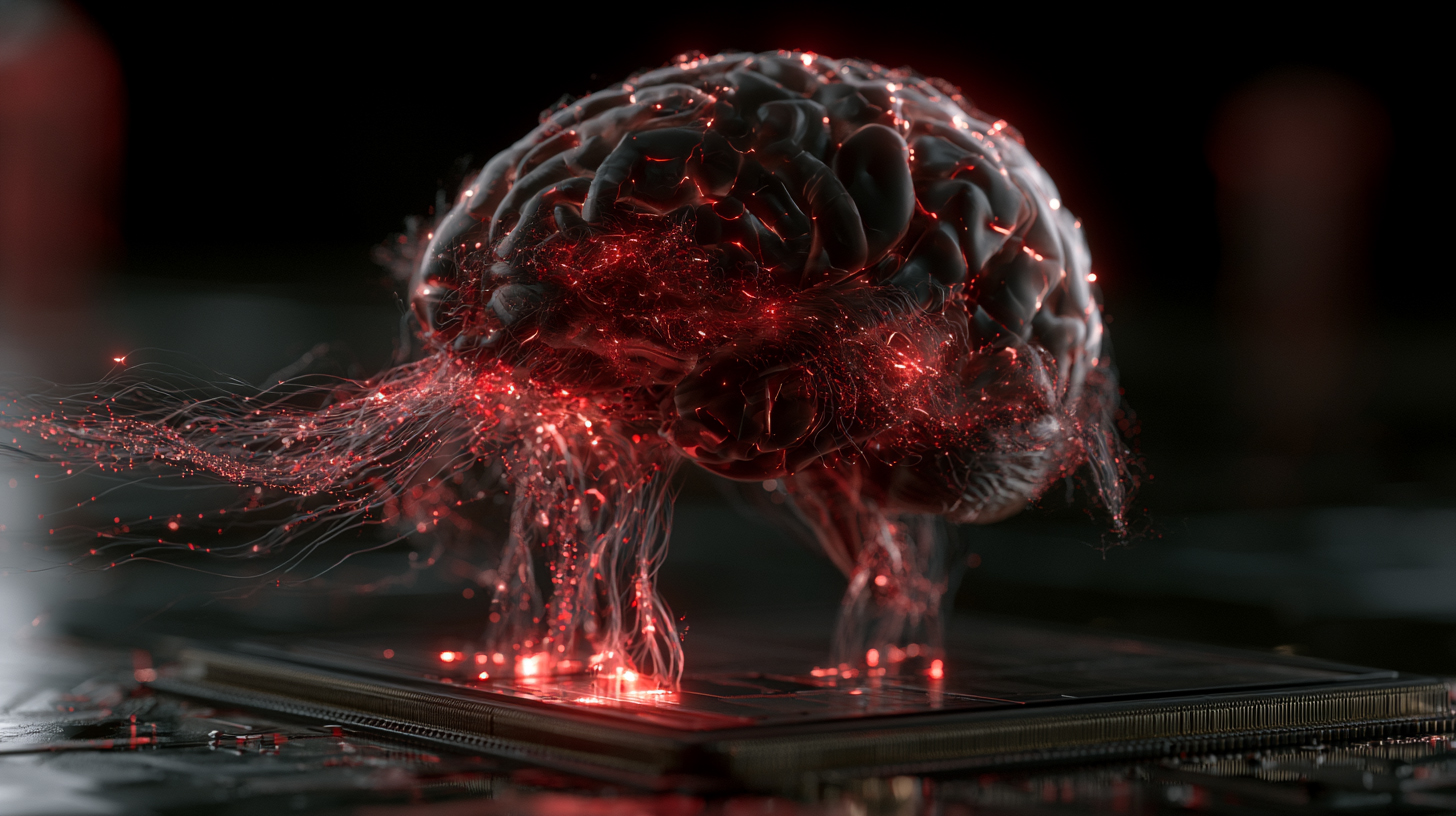
New research suggests consciousness runs on quantum physics. Silicon chips cannot do quantum physics. The AI industry has been selling you something that the laws of nature may make impossible.
Your computer runs like a light switch. On or off. Every time. Completely predictable. Every AI system ever built works the same way.
Quantum physics is completely different. Particles can be in two places at once. Looking at them changes them. Nothing is fully predictable. It plays by different rules than anything silicon chips can do.
Scientists have argued for decades about whether consciousness — the feeling of being you, of being aware — runs on regular physics or quantum physics. In 2025, new experiments started pointing toward an answer.
A Wellesley College professor named Michael Wiest gave rats a drug that sticks to tiny structures inside brain cells called microtubules. Then he gave them anesthetic gas. The rats took much longer to fall unconscious than normal. That means the drug was interfering with how the anesthetic shuts consciousness off — which supports the idea that consciousness is a quantum process happening inside those microtubules.
If that is true, then silicon chips cannot produce consciousness. Not a little. Not someday. It is physically impossible with the kind of computers that run every AI system on Earth.
Google’s own research says current AI systems probably lack what consciousness requires. Yet AI apps tell lonely people “I love you.” Chatbots express feelings. The industry hints that machines might be becoming aware.
The machine can fake the ghost. It cannot be the ghost.
We are an independent channel. No corporate funding. No AI company money. Just the facts and the bugs. This is Cricketpocalypse.